Emptiness
The empty is just as important as the whole. According to a Chinese proverb, “the vase gets its value from the empty space within it. Without it, it loses it’s usefulness of storing things. It stops being a vase.”
The same concept applies to many areas of life if you rephrase it slightly: “More important than what you do is what you don’t do.” Think of your diet, your habits, what you watch, read, or do on the internet—the list goes on.
In the age of smartphones and constant connectivity, countless things compete for our attention. There’s always an option to “relieve us from boredom,” wherever we may be.
But perhaps a bit of that “boredom”, a bit of empty time, is not such a bad thing. Doing nothing for a while leaves room to process emotions, organize thoughts, and de-stress.
When we are constantly occupied with this or that, there’s no space for that reflection, and perhaps that’s one reason we feel increasingly stressed.
This doesn’t mean being lazy. We can all afford to set aside 30–45 minutes a day for a bit of stillness.
On a similar subject, check this video by Cal Newport on doing less.
Importance vs urgency
There’s simply not enough time or resources to do everything. Whenever you choose to do one thing, you’re choosing it over countless alternatives. For example, by reading this post, you’re choosing not to spend those minutes on social media or reading something else.
Since we can’t do everything, we must first determine what’s most important—based on our long-term and short-term goals—and focus on that.
The key detail we often miss is the difference between urgent and important. Something urgent, like replying to an email, is not necessarily important long-term. And something important, like improving your diet, isn’t necessarily urgent.
You could start eating healthier and not see meaningful results for months, but that doesn’t make it any less important.
We need to be more mindful about how we spend our time. Don’t get caught up spending all your energy on what’s merely urgent, because what truly matters usually plays out over a longer timeframe.
Make it a rule to dedicate at least 10–15% of your time to something that matters to you in the long term—and ideally, do it early in the day, when you have more energy.
Saying no is the greatest productivity hack
What’s the best way to create more “empty time” for yourself AND find more room to focus on what’s important?
Of course, it’s by being better at saying no.
Every yes you give has a hidden cost. You’re giving away time, energy, and attention that could be spent elsewhere.
Most people underestimate how costly each yes actually is. It’s not just a few minutes here and there. it’s often a mental commitment, a distraction, a background process that keeps running in your head.
Learning to say no doesn’t mean being rude or selfish. There are polite and effective ways of doing it. It’s really about protecting your priorities. When you say no to something unimportant, you’re really saying yes to something meaningful: your peace, your focus, and your long-term goals.
Of course, it’s not easy. Many of us are conditioned to please others, to be agreeable, or to avoid disappointing people. But in the long run, saying yes to everything leads to mediocrity in many things instead of excellence in a few.
A good rule of thumb: if it’s not a “hell yes”, it’s probably a no.
You can’t learn that which you think you already know
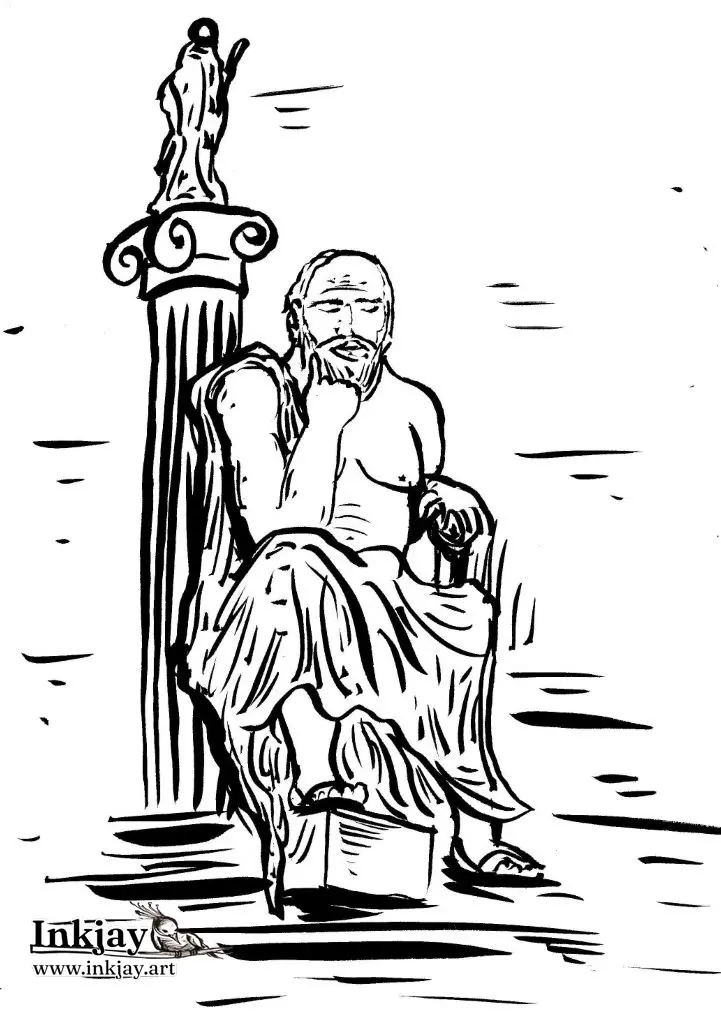
This is a quote from Epictetus. Of course, when reading it, it seems obvious, common sense.
But if this is the case, why don’t we apply it more in our lives? Are we truly not guilty of this?
I certainly was for a while. I only realized its significance relatively recently, when I took a writing course. Initially, I thought I already knew how to write and was hesitant to enroll. But I did it anyway (ironically, as a way to procrastinate on actually writing). My thoughts were: “I already know how to write. Everyone learns it in school, right?”
Boy, was I wrong. I discovered countless areas for improvement: from making my writing clearer and more engaging to simply making it grammatically cleaner. And of course, there’s still plenty to learn.
Even if you’re an expert in your field, there’s always room to improve. Consider Magnus Carlsen, the most dominant chess player in the world. It’s fascinating to see AI analyze his games and point out all sorts of errors and inaccuracies.
If even the best in the world have more to learn, why would it be any different for you or me?
Failure is part of the process
Throughout history, there are countless examples of great people who experienced overwhelming setbacks.
Consider Thomas Edison, who famously said he “hadn’t failed but rather found 10,000 ways that won’t work” before successfully inventing the lightbulb. Or consider J.K. Rowling, who once said she “failed on an epic scale” in her twenties, personally and professionally. A short marriage imploded, and she was a single mother and unemployed former teacher on welfare. It would take countless rejections from publishers before her opus magnum, Harry Potter, transformed into a global phenomenon.
Vincent Van Gogh is another example. For years in his youth he was doing all kinds of different things: he had been a student, an art dealer, a teacher, a bookseller, a prospective pastor and an itinerant catechist. He failed decisively in every path he tried. Only at 27 he started making paintings. At 33 he enrolled in an art school, where judges harshly suggested him to revert to a beginner’s class with ten-year-olds. Nowadays he is among the most prominent figures in art history, and even his lesser works are worth millions of dollars.
The list of examples goes on and on.
For every great idea we produce, there are likely dozens of mediocre ones. Those “failures” are not just inevitable — they’re essential. Each one brings you closer to something that works. In that sense, failure isn’t an accident; it’s merely a part of the process.
It’s also a matter of probabilities. The more attempts you make, the higher your chances of success. Like rolling dice: the more you roll, the more sixes you’ll eventually get. As Ray Bradbury said, “Quantity produces quality.”
If you stop fearing failure, you free yourself to create more, experiment more, and discover things others never dare to try. Through this fearlessness come the most world-changing innovations, as well as the most spectacular blunders. But it’s worth the risk.
To master failure, you first need to let go of ego. Stop caring so much about what others might think. It usually doesn’t matter anyway.
Focus on Actions, not Results
I used to play in chess tournaments a few years back, and one thing I initially struggled a lot with, was stress. I had many games where the same pattern kept repeating:
1) I got a great position against a stronger opponent.
2) The though of winning against such a strong player paralyzed me, and I lost focus.
3) I made a few uncharacteristically bad moves, threw away the advantage, and eventually went on to lose.
Over time, I became better at handling such stress. So what changed?
Before and during each game, I reminded myself that the result didn’t matter. I told myself to focus on finding good moves, like when I play casually. That is, I took away focus from the result, and moved it towards the moves, the actions.
I tried to detach myself from the game, and see it as if it was the game of someone else and I was advising him for moves. My objective was not to beat my opponent, but rather to find the best move I can in each position.
That small mental shift made a huge difference. I ended up winning a couple of tournaments this way, even against players with much higher ratings.
The same principle applies beyond chess. Focus on the moves, not on winning.
- Don’t say, “My goal is to lose X kilograms in a month.” Say, “My goal is to go to the gym three times a week for the next month.”
- Don’t say, “I want to get an A+ on the test.” Say, “I’ll study for three to four hours a day for the next month.”
Quantitative Fallacy
We often disregard what’s intangible and hard to measure in favor of what’s easy to measure. But being easy to quantify has no correlation with being important or true.
This is the quantitative fallacy (also known as McNamara Fallacy). It got it’s name from the US Secretary of Defense during the Vietnam war.
He famously relied almost entirely on numbers— like body counts and other metrics— as indicators of success. Yet despite Vietnam’s far greater casualties, the war ended as a strategic defeat for the United States (58,000 American deaths versus an estimated 3,000,000 Vietnamese).
If you look closely, you can see this bias almost everywhere.
Take urban design, for instance. Engineers often prioritize quantity: more square meters of parking, more retail space, more high-rises. In the process, they neglect the unquantifiable — public spaces, quality greenery, aesthetics, human happiness, collective memory, and identity. In chasing value, they lose values.
You can see the same pattern even in video games. Newer players tend to prefer straightforward, measurable abilities like “deal X damage” or “heal X health.” They underestimate abilities like “distribute your damage more efficiently” or “delay the damage you take.” The latter may be harder to quantify, but often they’re far more powerful.
We instinctively gravitate toward what’s easy to measure. Yet, what truly matters often can’t be measured.
Assume Formlessness
In the 48 Laws of Power, Robert Greene’s final law is “Assume Formlessness”. He argues that being predictable is a weakness, something “your enemies can exploit”.
In contrast, flexibility is strategic. It gives you options and creates surprises for your opponents. By being flexible, and changing your systems and approach based on the situation, you can better suit your needs.
Historically many world chess champions had a unique style that defined them. Tal was known for his creative play, Karpov was known for his strategy and restrictive style and Kasparov was known for his sharpness and aggression.
Magnus Carlsen, the best chess player of our era, is unique in that his style is having no fixed style. He can find the best moves in any kind of position: be it endgames, defense, offense, complicated middlegames, or tactical positions. When asked about his playing style in an interview he said: “Having preferences is having weaknesses.” In this way, Carlsen is formless.
Kodak, on the other hand, is a classic example of what happens when an organization lacks flexibility. For decades, it dominated photography — even the first photo of the moon was taken with a Kodak camera. Ironically, Kodak itself invented the first digital camera in the 1970s, but feared it would hurt its lucrative film business. By the 1990s, while competitors were investing heavily in digital technology, Kodak clung to film. In 2012, it filed for bankruptcy. Its rigidity — not its lack of innovation — was its downfall.
We live in an uncertain age, where change happens at an accelerating pace. Who knows what society will look like in 10 or 20 years, with advances in AI and technology reshaping everything? The ability to adapt — to assume formlessness — is more relevant than ever.
It’s okay to quit early
There’s this cliché our society promotes: the fighter who keeps getting up, no matter how many times he falls. From childhood, we’re bombarded with messages like “never give up.” Persistence is celebrated as a virtue, while quitting is seen as failure.
But I’ve come to realize that’s not how the real world works. Our time and energy are limited. Doing one thing means not doing something else. There’s an opportunity cost attached to everything we do.
In that sense, quitting can be liberating. It frees up space for new possibilities to emerge.
I’m not suggesting we all become perfectionists who endlessly search for the “perfect” thing to do. Good enough is good enough. But we should stop glorifying persistence for its own sake. Sometimes, persistence is what keeps us stuck: in a job we hate, a project that’s going nowhere, a failed business venture, or a relationship that no longer works.
When done purposefully, quitting isn’t failure: it’s a decision to redirect your finite time and energy toward something that serves you better.
If you’d like to explore this idea further, I recommend Quit: The Power of Knowing When to Walk Away by Annie Duke.
Inspiration is a myth
When we think of the great achievements of humankind, we often imagine a spark of divine inspiration — Archimedes leaping from his bath shouting “Eureka!” or Newton discovering gravity when an apple fell on his head.
In reality, this is all a myth. In The War of Art, Steven Pressfield makes a clear distinction between the amateur and the professional:
“The amateur waits for inspiration; the professional treats creativity like a job. They show up and do the work, even when the muse isn’t there.”
James Clear echoes this in Atomic Habits: small, consistent actions compound into remarkable results. You don’t need to feel inspired to start; you just need to start small and keep going. Over time, the habit itself becomes the engine, and momentum takes over.
So stop waiting for the “right” time to begin. It never comes. Instead, just keep at it, little by little everyday, and eventually you’ll get there.